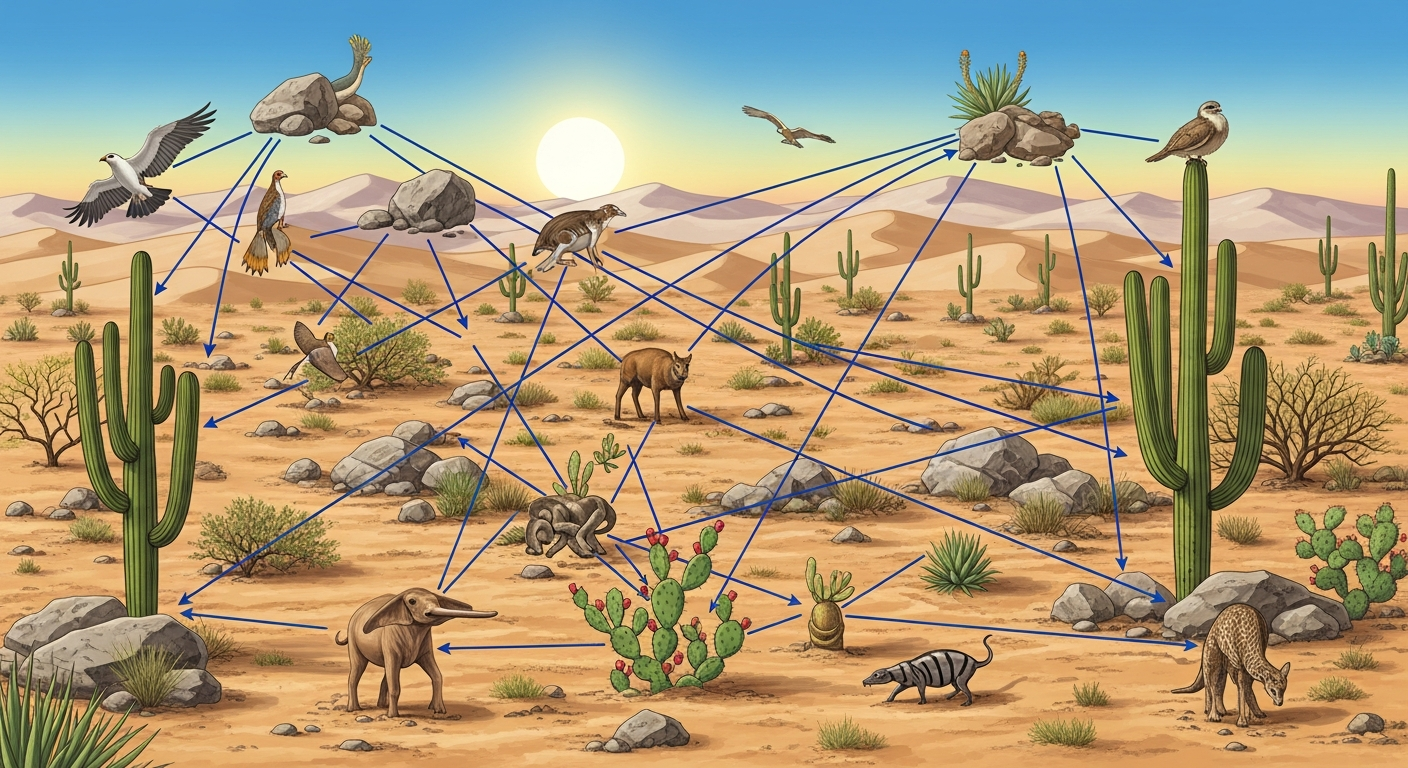
A Desert Food Web is a system that shows how plants and animals in the desert depend on each other for food and survival. In the desert, water is scarce, and life must adapt to extreme heat and dryness. Yet, deserts are full of life, from tiny insects to large predators. In a desert food web, each living thing plays a role, either producing food, eating others, or breaking down dead plants and animals. The desert food web is not just a chain but a complex network where many species connect in multiple ways. This system helps the desert ecosystem stay balanced, even when conditions are harsh.
What Is a Desert Food Web?
A desert food web is a diagram that shows how energy moves through a desert ecosystem. Energy starts from the sun and travels through plants, animals, and decomposers. Instead of a simple line, a food web has many connections because animals often eat more than one type of food. For example, a lizard may eat insects, plants, or even small rodents. A food web is different from a food chain because it shows multiple pathways of energy. In deserts, food webs are fragile because plants grow slowly, and water is limited. If one species disappears, it can affect many others. That is why every part of the desert food web matters.
The Sun: The Starting Point of the Desert Food Web
Every desert food web begins with the sun. Sunlight provides energy that plants use to make food through photosynthesis. This energy becomes the foundation for all life in the desert. Desert plants like cacti, sagebrush, and shrubs store water and survive long droughts. Even in dry sand, plants can grow roots deep into the soil to reach water. The energy stored in plants supports herbivores (plant-eaters) and then carnivores (meat-eaters). Without the sun, plants would not grow, and the entire desert food web would collapse. This is why the sun is the most important part of the desert ecosystem.
Producers in the Desert: The Plant Powerhouses
In a desert food web, producers are plants that make their own food. They are the base of the system. Desert plants have special features like thick leaves, deep roots, and water-storing stems. Cacti, desert grasses, and small shrubs are common producers. Some plants even open their leaves at night to reduce water loss. These producers provide food for many animals, such as rabbits, insects, and small rodents. Without producers, herbivores would not survive. That would also affect predators that depend on those herbivores. Producers are like the “energy bank” of the desert, storing sunlight as food for the entire food web.
Primary Consumers: The Desert Plant Eaters
Primary consumers are animals that eat plants in a desert food web. These animals include rabbits, rodents, insects, and some birds. They rely on desert plants for energy and water. Many of these animals are active at night to avoid the heat. For example, kangaroo rats can live without drinking water because they get moisture from seeds. Insects like beetles and ants also feed on plants and seeds. These primary consumers are very important because they transfer energy from producers to higher-level animals. If primary consumers decline, the whole desert food web becomes weaker.
Secondary Consumers: The Desert Meat Eaters
Secondary consumers are animals that eat primary consumers. In the desert food web, these include lizards, snakes, birds of prey, and small mammals. For example, a snake may eat a rodent, and a hawk may hunt a lizard. Many of these animals are skilled hunters and use camouflage to blend into the desert sand. Some animals like foxes and coyotes can eat both plants and animals, making them omnivores. Secondary consumers help control the population of primary consumers, which keeps the desert balanced. They also provide food for higher predators.
Top Predators: The Desert Food Web Leaders
Top predators sit at the highest level of the desert food web. These animals have few or no natural enemies. Examples include desert foxes, hawks, and large snakes. Top predators are powerful and help control the populations of other animals. They prevent overgrazing and keep the food web balanced. A top predator may eat a snake, rabbit, or even smaller predators. When a top predator disappears, the desert food web can become unstable. That can lead to too many plant-eaters, which may damage plant life. Top predators are the leaders that keep the desert ecosystem healthy.
Decomposers: Nature’s Cleanup Crew
Decomposers are animals and organisms that break down dead plants and animals. In the desert food web, decomposers include bacteria, fungi, and insects like beetles and ants. They turn dead matter into nutrients that return to the soil. This process helps plants grow again, which supports the entire food web. Without decomposers, dead plants and animals would pile up and nutrients would not return to the soil. Decomposers are often unseen, but they are vital to the desert ecosystem. They complete the circle of life by recycling energy and matter.
Adaptations: How Desert Animals Survive
Animals in a desert food web must adapt to survive. Many desert animals are nocturnal, meaning they are active at night when temperatures are cooler. Some animals, like camels and lizards, can store water or reduce water loss. Others use camouflage to hide from predators. Desert insects can survive extreme heat by burrowing into the sand. These adaptations help animals stay safe, find food, and stay hydrated. The desert food web relies on these survival strategies because conditions can change quickly. Adaptations help animals stay alive even when food and water are scarce.
Why the Desert Food Web Is Important
A desert food web keeps the ecosystem balanced and healthy. It connects all living things through energy flow and survival. Each organism has a role that supports others. When one species disappears, it can cause a chain reaction. For example, if plant-eaters decline, predators may not find enough food. If plants die, the whole food web collapses. Understanding the desert food web helps us protect fragile desert ecosystems. By conserving water, reducing pollution, and preserving habitats, we can keep deserts thriving. The desert may seem empty, but it is a complex web of life.
Desert Food Web Example: A Simple Web
Here is a simple example of a desert food web:
- Producers: Cacti, desert shrubs
- Primary consumers: Rabbits, insects, rodents
- Secondary consumers: Lizards, snakes, birds
- Top predators: Hawks, foxes
- Decomposers: Bacteria, fungi, beetles
This example shows how energy flows from plants to herbivores and then to predators. It also highlights the important role of decomposers. In real deserts, food webs are more complex with many more species and connections.
Complete Desert Food Web Biography Table
| Role | Example Organisms | What They Eat | Key Desert Adaptation | Why They Matter |
| Producer | Cactus, desert shrubs | Sunlight (photosynthesis) | Stores water in stems | Provides energy for all |
| Primary Consumer | Kangaroo rat, rabbit, grasshopper | Seeds, plants | Nocturnal, water-saving | Transfers energy to predators |
| Secondary Consumer | Lizard, snake, owl | Insects, rodents | Camouflage, heat tolerance | Controls herbivore numbers |
| Top Predator | Hawk, fox, bobcat | Small animals | Strong hunter, fast | Keeps food web balanced |
| Decomposer | Bacteria, fungi, beetles | Dead plants/animals | Survives on decay | Recycles nutrients |
(FAQs)
1. What is a desert food web?
A desert food web is a system that shows how energy moves between plants, animals, and decomposers in the desert ecosystem.
2. How is a food web different from a food chain?
A food chain is a straight line, while a food web shows many connections and multiple feeding paths.
3. Why are desert food webs fragile?
Desert food webs are fragile because water and food are limited, so small changes can affect the entire system.
4. What is a producer in a desert food web?
A producer is a plant that makes its own food using sunlight, like cacti or desert shrubs.
5. Who are the top predators in a desert food web?
Top predators include hawks, foxes, and large snakes, which help control animal populations.
6. Why are decomposers important in the desert?
Decomposers break down dead plants and animals, returning nutrients to the soil and helping new plants grow.
Conclusion: The Desert Food Web Is a Real Wonder
The desert food web is a powerful example of how life adapts and survives in harsh conditions. Even though deserts seem empty, they are full of connections. Each organism plays a role that supports others. Understanding this web helps us appreciate the delicate balance of nature and encourages us to protect desert ecosystems. If you want to explore further, try drawing your own desert food web or researching local desert animals. The more we learn, the more we can protect this amazing world.